%20LinkedIn%20page%20(2).png)
How Accounting Firms Can Use Webinars to Drive Qualified Leads

Updated: Jun 9

Accounting firms can use webinars to drive qualified leads by building a structured system around four components: a targeted audience, a problem-specific topic, deep educational content, and a post-webinar diagnostic call. The webinar creates authority; the diagnostic call creates the qualified conversation. Used together, this turns webinars into a repeatable client acquisition channel that feels less 'salesy' — not just a content event.
Why Most Accounting Firm Webinars Fail to Generate Leads
The most common mistake Accounting Firms make with webinars is believing webinars are for educational purpose, or the webinar alone generates the lead.
The webinar creates authority. The diagnostic call creates the qualified conversation.
When firms treat a webinar as the end goal, measuring success by registration numbers or live attendance, they miss the structural element that converts education into pipeline.
Accounting Webinars Fail for One of Four Reasons
1.The audience is too broad
When an accounting firm hosts a webinar for "business owners," they are essentially inviting everyone who is a business owner, which sounds good in theory, but a nightmare for attract best-fit clients.
A business owner running a $500K construction company has completely different financial pain points than one managing a $3M professional services firm. A webinar topic broad enough to include both will not resonate with either.
The result is a room full of mismatched attendees who were curious enough to register but not qualified enough to convert.
2.The topic is firm-focused not buyer-focused
When your webinars are built around what the firm wants to showcase, their services, their process, their credentials, rather than the specific problem the prospect is lying awake thinking about, it falls flat.
A topic such as "How AI Makes Bookkeeping Easier" sounds interesting to the firm, but is irrelevant to the audience. This is because no business owner thinks about this topic because it is not a problem they have.
Buyers attend webinars to learn how to solve problems that are important to them, and if your topic does not speak directly to their problem they are currently experiencing, it will not generate qualified conversations around your services.
3.The content is shallow, and lacks depth of expertise
A webinar that spends forty minutes on surface-level information teaches the audience nothing and signals that the real value is being held hostage behind a sales conversation. Sophisticated buyers, the ones worth having, recognize this immediately and disengage.
Deep, substantive education is what separates a firm that is seen as just another firm with a sales pitch, from one that is seen as the obvious expert worth paying a premium for.
4.There is no structured follow-up
After conversations with 30+ Accounting firm owners, this is probably the biggest that gets the least attention.
Without a deliberate qualification step after the webinar, everyone who attended gets treated the same, the casually curious, the tire-kickers, and the genuinely ready-to-act buyers all land in the same follow-up sequence. This wastes your time and dilutes the pipeline with conversations that were never going to close.
A structured mechanism, such as requiring a diagnostic call, forces self-selection and ensures the firm is only investing time in those who have already demonstrated real intent.
Fixing these four issues transforms a webinar from a passive marketing activity into an active demand generation and client acquisition system.
Hosting Webinars for your Accounting Firm that Converts
A webinar is not just a marketing activity. It's a repeatable client acquisition channel that allows accounting firms to educate cold audiences, demonstrate expertise, and move the right prospects into qualified conversations, without relying on referrals or feeling overly salesy.
Step 1: Start With a Specific Niche Audience
This is the most important step in the entire process.
A webinar designed for "business owners" is already too broad to drive qualified leads.
Accounting firms serve many types of clients, but not all of them are high-value. Some business owners want the cheapest possible tax filing. Some only need basic bookkeeping. Others are not ready to invest in ongoing strategic advisory support.
So before deciding on your topic, webinar platform, or promotion strategy, define specifically and precisely who you want to attend.
The webinar should be built for business owners who have the greatest chance to convert and actively experiencing the pain your firm can solve.
That may be owners struggling with:
Cash flow visibility and forecasting
Reactive accounting that costs them money
Books that are too messy to be useful for decisions
Compliance gaps or cleanup situations
Slow growth tied to poor financial reporting
The goal is not to get the highest registration count possible. The goal is to attract the right people who are already feeling the pain you can solve (and ready to pay to have it solved).
A qualified webinar starts with a qualified audience.
Step 2: Educate Around Their Problem, Not Your Service
The webinar topic should not be based on what the accounting firm wants to talk about. It should be based on what the audience needs to understand to solve their problem.
Strong webinar topics for accounting firms include:
"Why Your Books Are Clean But Your Cash Flow Is Still a Problem"
"The Real Cost of Reactive Accounting for Growing Businesses"
"How Poor Financial Reporting Is Slowing Your Growth"
"What Business Owners Get Wrong About Monthly Accounting Support"
"How to Use Your Financial Data to Plan for Higher Margins"
The strongest webinar topics make attendees think, "This is exactly what we are dealing with."

That is the entry point for a qualified conversation. If the topic feels generic, it attracts generic attendees. If the topic is firm-centered, it feels like a sales pitch before it even starts.
However, if the topic is focused on your target buyers' needs, it attracts attendees who become leads, and leads who become clients.
Step 3: Give Away Real Depth
A webinar should not be a thin sales presentation disguised as education.
The content should be detailed enough that someone could take it and begin implementing on their own. This sounds counterintuitive, but it is one of the most effective ways to build authority and trust, especially with a cold audience.

When an accounting firm teaches deeply, it proves competence. It shows how the firm thinks. It gives the audience a sense of the firm's diagnostic ability, judgment, and expertise.
The goal is not to withhold the "good stuff" so people are forced to book a call. The goal is to provide enough value that the right prospects reach two conclusions:
The problem is more important than they previously realized
They would rather have an expert help them solve it than attempt it alone
That is how education turns into demand for your services.
Step 4: Use a Diagnostic Call as a Qualifier
After the webinar, the most effective follow-up mechanism is a diagnostic call, not a sales call, and not a casual Q&A.
The diagnostic call is structured to:
Understand why the person attended the webinar
Identify the specific accounting problem they are trying to solve
Surface gaps or bottlenecks in their current financial setup
Determine what kind of support they actually need
On that call, the accounting firm can ask better questions, assess the prospect's real situation, and provide brief initial recommendations on how they can begin addressing the problem.
This is where qualification really happens.
People who take the time to book a diagnostic call are usually the serious ones. They are not just consuming free information. They are actively looking for a solution and willing to invest time to find it.
Step 5: Require Booking the Call Before Sending the Webinar Link
This is the structural element most firms resist, yet the one that changes everything.
When working with accounting and finance clients installing the Accounting Client Engine™, we tell them that in order for a registrant to get the webinar link they must book the diagnostic call.
This creates friction on purpose.
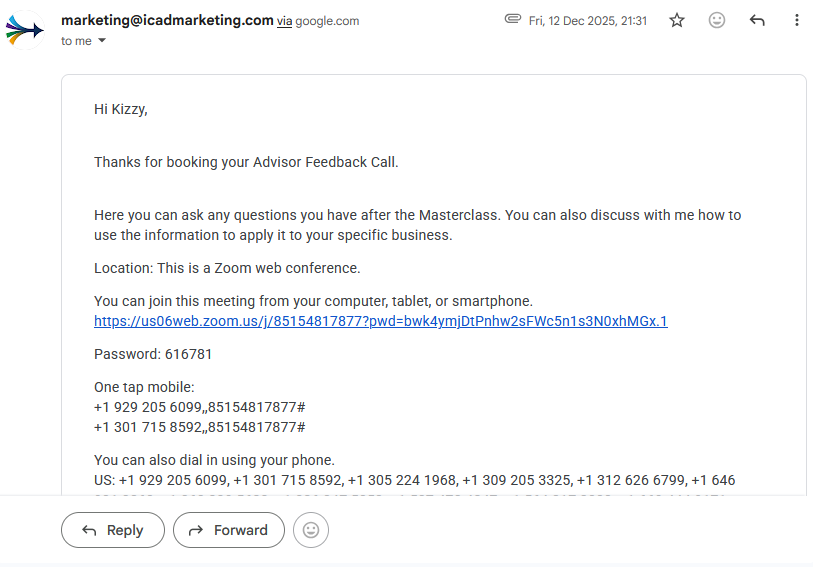
We automate this entire process for clients so they do not need to worry about manually sending the link to each person.
Most firms try to remove all friction because they want more registrations. However, as mentioned more registrations is not what we are after, quality of conversation is. We understand more does not mean more qualified leads.
Requiring the diagnostic call before delivering the webinar link filters low-intent people from high-intent people. Someone who books a call before attending the webinar is signaling that:
The topic is a pressing issue for them
They want clarity on the problem, not just free content
They are more likely to need help implementing what they learn
This changes the entire webinar from a passive content event into an active pipeline mechanism.
The webinar educates them on the problem and why the problem exists.
The diagnostic call connects the education to their actual business reality.
The next step becomes engagement with your firm to implement.
Step 6: Build the Audience Beyond Referrals
This step is critical for accounting firms that are too dependent on referrals to grow.
Webinars give firms a way to create qualified conversations without waiting for someone else to recommend them. The audience for a webinar can be built through in a few ways.
LinkedIn direct outreach — connecting with ideal clients and inviting them to a relevant webinar.
Paid ads — targeting by industry, company size, role, or revenue with a problem-focused message.
Direct messages — personalized invitations to existing prospects that you want to close.
Email campaigns — to warm leads, or opt-ins from your email list or newsletter subscribers where relevant.
Strategic partnerships — co-hosting with complementary service providers who have the audience you want to work with.
Any one or combination can work when the audience, topic, and follow-up system are properly aligned.
The Full Webinar-to-Lead System for Accounting Firms
When all six components work together, the webinar becomes a complete acquisition system.
Component | Purpose |
Specific audience | Attracts the right people; avoids tire-kickers |
Relevant problem-focused topic | Creates immediate resonance and buyer intent |
Deep educational content | Builds authority and demonstrates expertise, credibility and competence |
Diagnostic call requirement | Builds deeper connection and acts as the primary qualification layer |
Pre-webinar call gate | Filters high-intent from low-intent registrants |
Multi-channel audience building | Reduces Referral Dependency and builds repeatable pipeline |
The webinar alone is not the strategy. The system around it is.
Webinars allow Accounting firms to stop attracting everyone and start attracting the right people, while generating demand by educating buyers, and offering a clear next step when those buyers are ready to solve the problem.
Frequently Asked Questions
How long should an accounting firm webinar be?
A webinar designed to generate qualified leads should run between 60 and 90 minutes. This is long enough to deliver substantive education that builds authority, but focused enough to hold attention. Shorter webinars tend to feel promotional. Longer ones risk losing the audience before the call-to-action.
How many leads can an accounting firm expect from a webinar?
Fewer than most firms expect — but more qualified. A well-structured webinar that requires a diagnostic call before attendance typically converts at 20–30% of registrants into booked calls. Of those, a meaningful portion will be viable prospects. The goal is not volume. It is qualified conversations.
What accounting problems make the best webinar topics?
The best topics address financial problems that business owners feel but cannot easily name or solve on their own — cash flow management, the gap between clean books and financial visibility, the cost of reactive accounting, and how to use financial data for better decisions. Topics tied to growth, clarity, or compliance urgency tend to perform well. However, we recommend interview current clients or potential buyers to get a better sense of what is relevant to them.
Should accounting firms charge for webinars?
Free webinars with a gated diagnostic call typically outperform paid webinars for lead generation purposes. Charging for access shifts the frame from client acquisition to content monetization — a different model with different goals.
What is the best platform for accounting firm webinars?
Platforms such as Zoom Webinars or Google Meets are commonly used. The platform matters less than the structure of the funnel around it — including the registration page, the call booking requirement, the follow-up sequence, and the diagnostic call itself.
How often should accounting firms run webinars?
Once the system is validated and producing qualified leads, a monthly or bi-monthly cadence allows firms to continuously add prospects to their pipeline while refining the topic, audience targeting, and diagnostic call process.


Comments